


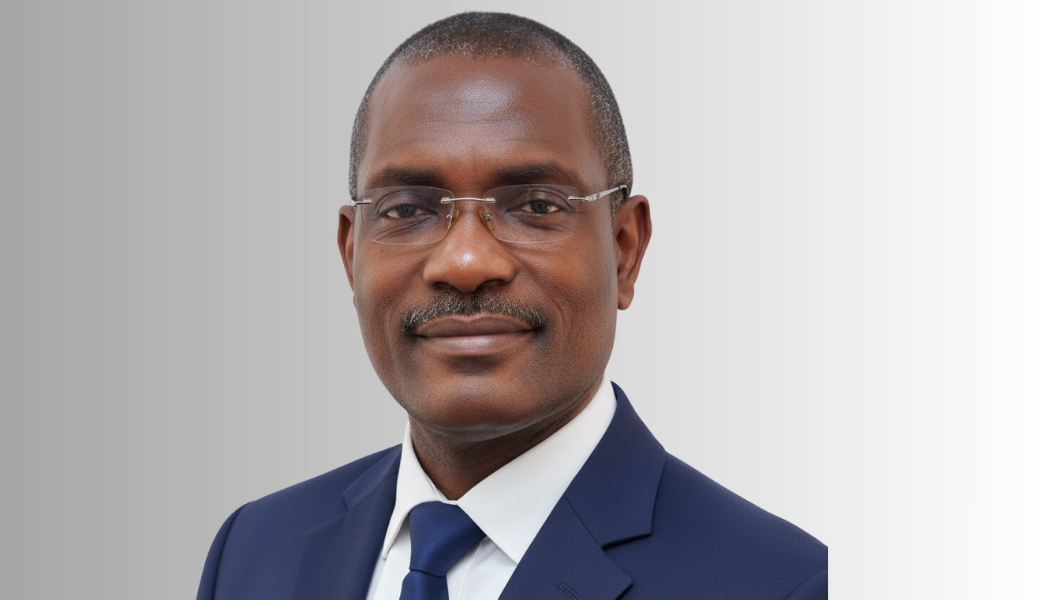
With more than two decades shaping credit risk, internal controls, and loan processing, Micheal Adesuyi’s disciplined approach to banking has earned him the Dratech Financial Innovation Excellence Award 2024.
A Win That Signals What Financial Innovation Should Look Like
The just concluded Dratech International Conference 2024 closed with a clear statement about what real financial innovation means in practice. Among the distinguished awardees this year, Mr. Micheal Olumuyiwa Adesuyi was recognised as one of the winners of the Dratech Financial Innovation Excellence Award 2024. He was selected from a pool of 15 nominees and emerged among the top 10 recognised winners, having met every judging criterion set for this year’s awards.
His recognition is not about a single product launch or a headline-grabbing transaction. It is the result of years of quietly reshaping how financial institutions make lending decisions, manage risk, strengthen internal controls, and uphold governance standards. In an industry where a single weak link in credit assessment or control can damage customer trust and destabilise balance sheets, his work sits at the centre of institutional resilience.
What this means in practice is that Dratech is shining a light on professionals who redesign systems, not just processes; who move institutions from reactive control to proactive risk management; and who understand that true innovation in finance is as much about discipline, structure, and insight as it is about technology.
Why His Win Matters For The Financial Innovation Space
Here is the thing: when people hear “financial innovation”, many think first about digital channels, apps, or new products. The Dratech Financial Innovation Excellence Award 2024, as reflected in Micheal Adesuyi’s profile, underscores a broader and deeper meaning.
Innovation in finance is not only about what customers see. It is also about the architecture underneath, where loans are assessed, risks are weighed, approvals are documented, and institutional exposures are monitored. This is where Micheal has spent much of his career.
By modernising loan processing systems, deepening internal control structures, and supporting structured credit decision frameworks, he has helped turn complex, fragmented processes into predictable systems that strengthen institutional stability. His contributions help banks avoid the silent accumulations of risk that eventually surface as non-performing loans, capital strain, or regulatory breaches.
For regulators, investors, and customers, professionals like him are part of the invisible infrastructure that keeps financial systems safe. For the wider innovation ecosystem, his win reminds the sector that progress is not only about speed or novelty. It is also about reliability, traceability, and sound judgement embedded into everyday financial decisions.
His Professional Journey: From Branch Floors To Strategic Leadership
Over more than two decades, Micheal Olumuyiwa Adesuyi has built a career that cuts across the full value chain of banking operations, lending, and oversight. He did not arrive in financial leadership overnight. He moved through roles that exposed him to frontline realities, back-office complexity, and board-level expectations.
He began in branch operations and customer service, where he gained a grounded understanding of how financial products are delivered, how customers experience banking, and how operational lapses can easily create downstream risk. That early exposure to retail and corporate customers shaped his appreciation of both process and people.
From there, he moved into credit and marketing audit and then internal audit. These roles shifted his vantage point from daily execution to critical review. He examined how credit was being booked, how approvals were documented, how exceptions were handled, and where weaknesses in design or execution could lead to future losses. Audit sharpened his eye for detail and taught him how to translate technical findings into clear, actionable recommendations for management.
His progression into audit and compliance leadership extended his responsibility from reviewing individual cases to shaping the overall control environment. In those positions, he was no longer just reporting incidents. He was guiding how policies were interpreted, how control gaps were closed, and how teams were trained to align with regulatory and internal expectations.
The journey then evolved into a critical leadership role as Head of Corporate Loan Processing and Collateral Management at First Bank. At that point, he stood at a key junction of the bank’s risk architecture, where large credit decisions are translated into enforceable documentation, verified collateral, and consistent processing standards. It is a position that requires a blend of technical expertise, risk sensitivity, and strong stakeholder management.
Core Achievements Across Credit, Risk, Audit, And Controls
Across these roles, Micheal’s work has consistently pushed institutions toward stronger loan portfolios and healthier risk profiles.
As Head of Corporate Loan Processing and Collateral Management, he coordinated the full life cycle of corporate credit documentation, from approval capture to collateral perfection and condition monitoring. By standardising documentation requirements and aligning them tightly with credit policies, he helped reduce ambiguity, close loopholes, and minimise documentation-related disputes during loan monitoring or recovery.
He championed the use of clearer workflows that mapped each step in the credit documentation and collateral management process. This contributed to faster and more predictable turnaround times for corporate lending, without compromising risk standards. Business teams could plan with better accuracy because they knew what was required, how files would move, and how long decisions would take once complete documentation was submitted.
In parallel, his work improved risk management outcomes. Tighter linkage between credit approvals, documentation, and collateral data meant that exposures were more accurately captured and monitored. It reduced gaps between what was approved on paper and what was actually enforceable in practice.
During his time in internal audit roles and later as Head of Audit and Compliance, he developed a reputation for delivering clear, focused reports that did more than identify problems. His reports pointed out value leaks, control failures, and process inefficiencies, and then connected those findings to practical solutions. Management teams received not just lists of exceptions, but structured guidance on how to close gaps, improve governance practices, and sustain improved performance.
His audit work helped tighten controls around lending, operations, and compliance. It supported better alignment between frontline practices and board-approved policies. Where necessary, he pushed for improvements in segregation of duties, approval limits, documentation standards, and monitoring routines. Over time, this kind of work reduces incidents, enhances regulatory confidence, and protects the reputation of the institution.
Across credit, risk, audit, and controls, his career has been characterised by disciplined thinking, consistent follow-through, and a strong awareness of the link between process quality and financial outcomes.
Academic Depth And Professional Standards
Behind his practical work in the banking sector is a strong academic and professional foundation. Micheal Olumuyiwa Adesuyi’s educational journey has given him tools to look at financial systems from strategic, international, and entrepreneurial lenses, not just from an operational point of view.
He holds a Master of Science in International Business from Luleå University of Technology in Sweden. That training added a global perspective to his understanding of markets, cross-border business, and strategic management. It also exposed him to international case studies on how institutions manage growth, competition, and governance.
He complemented this with an Executive Master in Innovation and Entrepreneurship from Rome Business School. That programme sharpened his ability to think about innovation in structured ways: how new ideas are developed, tested, implemented, and scaled; and how organisations can introduce change without losing control.
Earlier in his academic path, he completed an MBA in Management and a Bachelor’s degree in Entrepreneurial and Business Management. These qualifications deepened his knowledge of organisational behaviour, strategy execution, and business development. His Higher National Diploma in Accountancy provided strong grounding in financial reporting, cost structures, and performance analysis.
On the professional side, he is a Chartered Accountant through the Institute of Chartered Accountants of Nigeria (ICAN) and a member of the Association of Chartered Certified Accountants (ACCA). These professional designations signal an ongoing commitment to ethics, continuous learning, and global standards in financial practice.
Taken together, his academic and professional profile strengthens his authority in designing and assessing systems. It helps explain why his approach to loan processing, internal controls, and audit is both practical and conceptually sound.
Why He Fits The Dratech Financial Innovation Excellence Award Criteria
The Dratech Financial Innovation Excellence Award 2024 is not a symbolic recognition given lightly. The judging framework looks for professionals who transform financial systems in ways that improve stability, transparency, and performance. In this context, Micheal’s profile aligns closely with the spirit and substance of the award.
First, his work modernising loan processing and collateral management has contributed to more disciplined and predictable credit decision environments. By building frameworks where documentation, collateral, and policy are tightly integrated, he has helped his institution avoid the kind of structural weaknesses that often lead to impaired assets.
Second, his leadership in audit and compliance has strengthened governance. His reports and recommendations have supported better oversight of credit, operations, and compliance. In a sector where regulatory expectations are rising and tolerance for control failures is shrinking, his ability to translate complex findings into clear, actionable guidance is a critical asset.
Third, his orientation is deeply strategic. He does not treat controls as a box-ticking exercise. He understands that strong internal controls and disciplined credit processes are levers for long term institutional growth. They free management to focus on strategy and innovation without constantly being pulled back by avoidable crises.
Fourth, his career demonstrates a consistent commitment to operational integrity. Whether in the branch, in audit, or in corporate loan processing leadership, he has worked to ensure that what is on paper aligns with what happens in practice. That alignment is at the heart of responsible financial innovation.
For these reasons, his emergence among the top 10 recognised winners, from 15 nominees, is not surprising. It reflects a careful evaluation of his track record against the award criteria and confirms that his contributions are shaping the kind of financial environment Dratech seeks to promote.
Broader Impact On Financial Governance And Business Growth
When you step back from individual roles and titles, a broader picture emerges. Michael’s work has helped create institutions where risk is better understood, where lending decisions are backed by strong documentation and enforceable collateral, and where internal controls are not seen as obstacles but as essential infrastructure.
This has several ripple effects.
For customers, it supports more consistent and fair lending decisions. When banks operate with clear frameworks and disciplined processes, customers are less exposed to arbitrary decisions or unresolved disputes over terms and conditions.
For shareholders and investors, stronger loan portfolios and tighter controls reduce the likelihood of unexpected losses. This stabilises earnings and protects capital. It also strengthens confidence that management is on top of both risk and opportunity.
For regulators, professionals like Micheal help bridge the gap between policy and practice. When internal controls are strong, compliance with guidelines is more natural and less reactive. Institutions spend less time firefighting and more time building.
For staff, his leadership sets a standard for accountability and professionalism. Teams working under clear frameworks, with well designed workflows and transparent expectations, are more likely to perform consistently and grow in competence.
Ultimately, this kind of work contributes to a healthier financial system, where innovation does not come at the expense of governance, and where growth is supported by solid foundations rather than fragile shortcuts.
A Call To Build Stronger, More Responsible Financial Systems
Micheal Olumuyiwa Adesuyi’s recognition with the Dratech Financial Innovation Excellence Award 2024 is a reminder that real progress in finance is often built quietly, through years of structured work, patient system redesign, and unwavering attention to detail.
As Dratech celebrates his contributions, the message to financial institutions, innovators, and leaders across Africa is clear. The future belongs to organisations that can balance innovation with discipline; that can introduce new products and digital tools, while maintaining firm control over credit quality, risk exposures, and governance.
For banks and financial service providers, this is a moment to re-examine internal processes, loan approval structures, documentation standards, and control environments. It is a prompt to invest in the kind of systems and people who can turn complex financial operations into transparent, reliable, and accountable frameworks.
For young professionals in finance, his journey shows that building expertise in credit risk, audit, and internal controls is not just a back-office path. It is a route to influence, leadership, and sector-wide impact.
As the Dratech International Conference looks ahead to future editions, the lesson from this award is simple. Institutions that prioritise transparency, stability, and responsible financial practices are not only safer, they are better positioned to deliver lasting value to customers and society. Recognising professionals like Micheal Olumuyiwa Adesuyi is part of that broader work, and it signals where the standards of financial excellence are heading.