


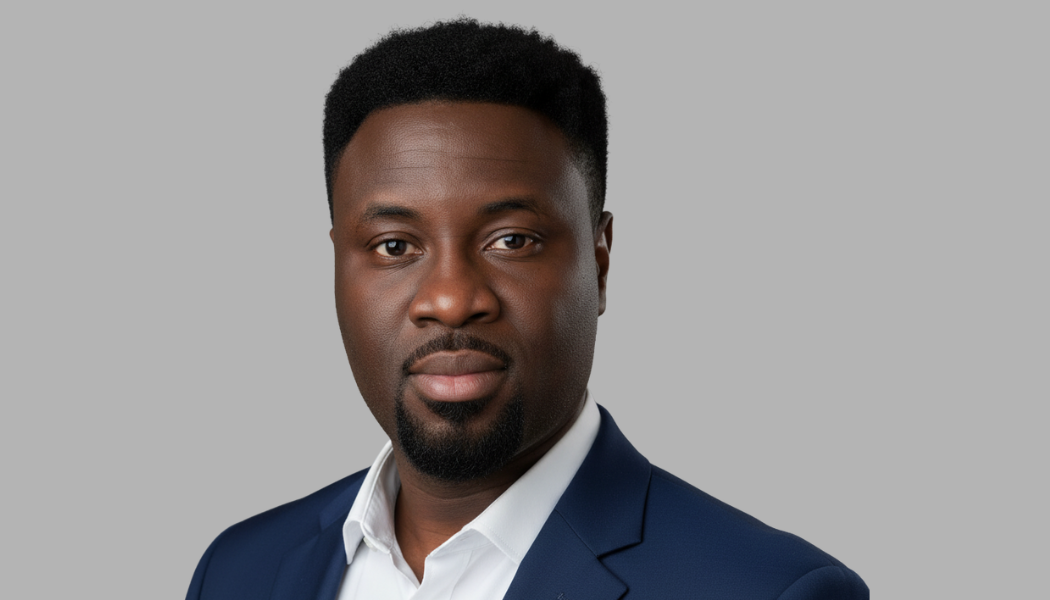
The moment the announcement was made inside the main hall of the Dratech International Conference 2024, there was a brief pause before the applause rose. The room already understood the weight of what had just happened. The Dratech Telecommunications Innovation Excellence Award is given only to professionals whose influence stretches far beyond project execution and into the deeper fabric of how networks evolve. When the spotlight settled on Mr Ajayi Olanrewaju, the reaction felt earned. His work has been moving silently but steadily across continents, across industries, and across the many layers that shape modern telecommunications. This recognition placed his name exactly where it has long belonged, among the voices reshaping how connected societies function.
Here is the thing. Ajayi represents a particular kind of professional. He is not only an engineer. He is not only a researcher. He is a bridge between fields, connecting research questions with the demands of real systems, and finding clarity in problems that many consider too complex to unpack. His story is one of persistence, curiosity, and a natural sense of responsibility for the systems people depend on every day. The 2024 Telecommunications Innovation Excellence Award celebrates exactly this type of contribution, and Ajayi stands as a strong example of what meaningful innovation looks like in practice.
His journey began with a grounding in Computer Science, followed by a master’s in Information Technology. These early steps shaped his understanding of how digital systems behave, how networks evolve, and how data-driven industries rely on reliable communication layers. Over time he added professional certifications in project management, cloud architecture, IT service management, and business strategy. Each qualification added a new dimension to his work. He was becoming an engineer who thinks like a strategist, a researcher who understands operations, and a technical leader with a firm sense of how technology decisions ripple across entire industries.
This foundation later formed the platform for his current research as a PhD candidate in Information Technology at the University of the Cumberlands. His doctoral work examines one of the most important questions in advanced telecommunications. How can 5G and IoT reshape industrial systems. The focus is on the real machinery of Industry 4.0. Predictive maintenance, automated systems, low latency communication, and intelligent decision cycles. Factories are becoming smarter, but the concepts behind them require precise network behaviour. Ajayi’s research explores how to make this ecosystem stable and efficient. He studies how 5G network slicing can support mission critical systems, how radio performance affects automated robotics, and how data from connected devices can strengthen quality control. His work has become a guide for anyone trying to understand how advanced networks serve industrial environments.
While his research grows, his industry work tells its own story. Ajayi’s professional experience covers Nigeria, South Africa, the United Kingdom, and the United States. Few engineers move this widely across telecom ecosystems while maintaining the same consistency of impact. He has handled 3G, 4G, and 5G networks, supported large scale swap projects, worked on network optimization for cities and regions, and taken responsibility for performance improvements at both macro and micro levels. In every environment he brought the same method. Understand the network. Diagnose the weak points. Improve the experience for end users. His work has passed through high pressure environments, from swap activities in major metropolitan regions to highly specialized 5G optimization projects for multinational operators.
Some achievements have become defining points in his career. He contributed to early 5G trials. He participated in rollout activities. He worked on open RAN deployments at commercial scale, giving him insight into one of the most important architectural shifts in telecommunication infrastructure. His roles included troubleshooting radio units, distributed units, and core network elements. He worked with engineers in the field. He supported operations teams during outages. He took part in configuration, acceptance testing, performance audits, and radio parameter tuning. These tasks may sound technical, but they shape the actual quality of the signal a user experiences when they try to make a call or connect a device.
His time with international teams refined his ability to work within diverse telecom environments. From the dense and highly regulated networks of the United Kingdom to the fast growing markets in Africa and the evolving 5G landscape in the United States, Ajayi has seen enough variations in design and execution to understand that innovation thrives when expertise is combined with adaptability. He has operated in environments where split second fault responses are necessary, where spectrum management carries commercial weight, and where small parameter adjustments can influence the performance of entire regions.
Alongside his engineering work, Ajayi has built a strong academic footprint. He has co authored research across telecommunications, cybersecurity, cloud computing, artificial intelligence, robotics, and data governance. His publications often focus on how theoretical models translate into real systems. Examples include using AI to optimize radio resource management, strengthening the security of 5G network infrastructures, improving industrial IoT performance, and developing transparent systems for autonomous decision making. He has written about data governance frameworks for multi cloud environments, the future of smart cities, and strategies for improving decision making in connected industries. The range is wide, but there is a single thread running through all of it. He is always looking for ways to improve how systems behave when deployed in real environments.
This is what separates a researcher who writes for academia from a researcher who writes for industry relevance. Ajayi belongs to the second group. His work is useful. It explains how to solve real problems. It highlights connections between AI, network behaviour, security frameworks, and industrial communication layers. Many of his papers have become key references for people studying the intersection of connectivity and automation.
His recognition has not been limited to the academic field. Over the years he has received acknowledgements from employers, partners, and international bodies. One notable highlight is the UK Innovator Visa endorsement, a signal that his ideas carry entrepreneurial value. He has also won awards for outstanding performance in telecommunications roles, showing that his work is not only innovative but also operationally reliable.
What this means is simple. Ajayi has built a career that sits comfortably at the meeting point of research and engineering. He understands how advanced telecommunications theories behave once deployed. He knows the requirements of industries that need reliable networks. He can move from designing frameworks to evaluating their performance in the field. This blend makes him a powerful contributor to Africa’s growing technology ecosystem and a strong voice in global telecommunications conversations.
This is precisely why the Dratech Telecommunications Innovation Excellence Award 2024 felt almost inevitable. The award celebrates individuals who are not only pushing the boundaries of network technology but also connecting innovation to real users, real cities, and real industrial needs. The selection committee focused on contributions that demonstrate consistency and long term impact. Ajayi’s portfolio checked every box. His influence spans continents. His work has supported network upgrades, enhanced the performance of next generation systems, strengthened cybersecurity frameworks, and expanded the understanding of 5G driven automation.
Another reason this award fits his story is his approach to knowledge. Ajayi shares what he learns. He publishes. He mentors. He collaborates. He brings clarity into technical conversations that often feel inaccessible. He understands that the future of telecommunications in Africa and beyond will require more than hardware and software. It will require people who can explain why certain decisions matter and how they ripple through entire infrastructures.
As the conference concluded and the award photos were taken, the broader implication of this moment became clear. Dratech is committed to celebrating innovators who treat technology as a tool for real transformation. Ajayi represents this philosophy. His work in radio engineering, network optimization, smart manufacturing, and AI based decision systems shows how much can happen when expertise is matched with purpose. His story is still unfolding, yet the foundation he has built already serves as a reference point for younger engineers and researchers looking for direction.
Looking ahead, the significance of this award goes beyond recognition. It signals trust. It signals responsibility. It signals that the future of telecommunications will be shaped by individuals who understand both the science behind the network and the human experience riding on that network. Ajayi continues to work at this intersection with the same quiet determination that has guided his career so far.
The Dratech International community congratulates Mr Ajayi Olanrewaju on winning the Dratech Telecommunications Innovation Excellence Award 2024. His achievements strengthen the foundation of the digital future we are building, and his work stands as a reminder that innovation holds its true value when it improves the way people live, work, and connect.