


When the lights softened in the main hall and the final category of the evening approached, there was a noticeable shift in the room. The Dratech International Conference 2024 had already delivered hours of recognition, reflection, and high level conversations on innovation, yet the anticipation around the Cloud Infrastructure Excellence Award carried its own weight. It was the category that spoke to the backbone of the modern digital economy. It recognized the engineers, architects, and thinkers who quietly keep the world running by making sure systems never falter.
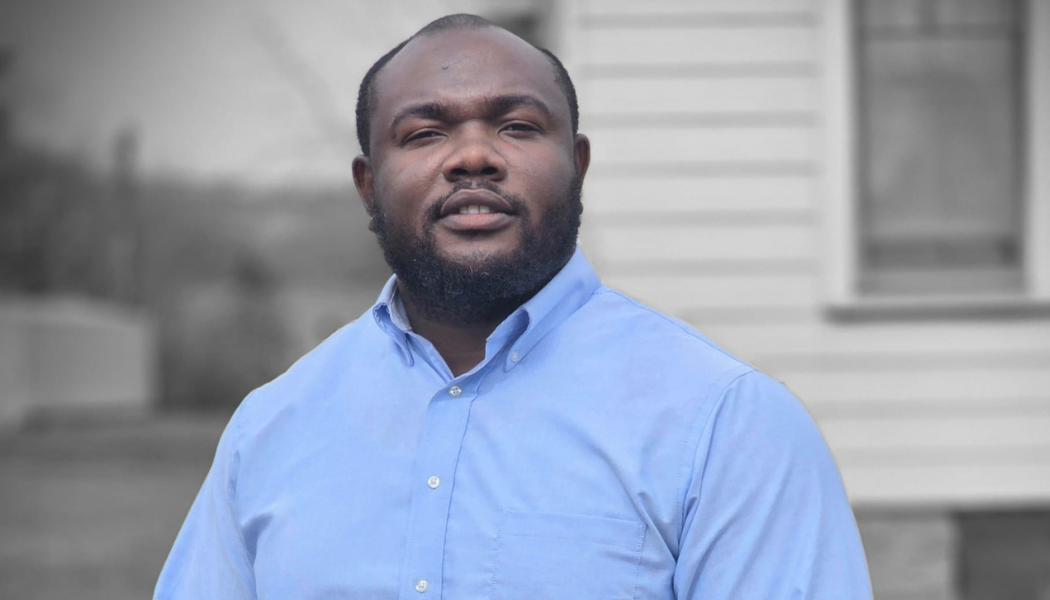
As the nominees appeared on the screen, whispers travelled across the hall. Fifteen professionals had made the shortlist, each with a strong record in cloud engineering, intelligent systems, and enterprise level reliability. Only ten had advanced to the final recognition stage, and among them was a name that had steadily gathered attention throughout the conference: Mr. Theophilus O. Oshoba.
The moment his name was announced, the hall rose in a warm, unforced applause. It was not the surprise of an underdog story. It was the confirmation of a reputation that had been building quietly and consistently across both industry and academia. His walk to the stage carried the calm of someone who has spent years solving intricate problems in the background, far from the spotlight. Yet tonight, the spotlight belonged to him.
This award celebrates professionals who strengthen the foundations of cloud computing. It recognizes those who build, refine, and expand the systems that support enterprise operations, secure data, and drive intelligent decision frameworks. Theophilus stood out because his work is grounded in one clear principle: technology should be reliable, understandable, and genuinely useful. That clarity shaped every step of his journey.
A Strong Beginning Rooted in Deep Thinking
Long before his work with cloud platforms and enterprise systems, Theophilus developed a habit of thinking about how systems behave. His academic foundation in Pure and Applied Physics did more than teach formulas. It gave him a way of looking at the world. Physics trains the mind to search for governing principles in complex environments, to understand cause and effect, and to respect how small variables can shift entire outcomes. That mindset stayed with him.
During his undergraduate years, he explored topics that demanded patience and careful analysis, from thermodynamics to vibrations and waves. He completed a thesis on estimating daily solar global radiation using air temperature, which sharpened his understanding of environmental data and measurement. It also gave him an early glimpse into how physical insight could translate into practical solutions.
When he later transitioned into computing, the shift did not replace his earlier interests. It strengthened them. His master’s degree in Cloud Computing, earned with distinction at Sheffield Hallam University, became the turning point. He designed and built a cloud based course registration portal during his academic project, using tools such as Django Framework, Python, MySQL, Azure services, JavaScript, and Bootstrap. The project blended theory and hands on implementation, proving that he could take an idea from concept to functional deployment.
His dissertation was even more ambitious. He created a mobile and web application for IoT based environmental monitoring, integrating sensors, the ThingsBoard API, MQTT protocol, and a PostgreSQL database to collect and analyze environmental data. The system generated reports, tracked air quality, and showcased how cloud frameworks can support real world monitoring needs. It was a clean demonstration of how physics, computing, and engineering could combine into something truly useful.
Real World Cloud Engineering at Enterprise Scale
While his academic work showed promise, it was his industry career that revealed the full range of his capabilities.
At Tek Experts, he entered the enterprise world as a technical support engineer working on Exchange Online, identity, compliance, and security workloads. His early responsibilities involved mailbox management, Active Directory synchronization, DNS configuration, threat protection, and governance features in Microsoft 365. These were not simple tasks. They demanded precision, patience, and a deep respect for the stability of systems that millions depend on every day.
He soon became a Technical Team Lead, guiding a large group of engineers and serving as an escalation point for advanced technical issues. He handled cases involving Teams, SharePoint Online, OneDrive for Business, Outlook, and identity systems. His work was not only technical. It required leadership, training, performance management, and the responsibility of ensuring that customers received resolutions grounded in best practice.
That experience prepared him for something even more demanding.
Scaling Up: Infrastructure, Security, and Cloud Architecture
His transition into broader cloud roles marked the next chapter. As a Microsoft 365 Infrastructure Engineer, he worked on migrations from on premise environments to cloud platforms, implemented multi factor authentication, built security layers, and improved data and system performance at scale. He handled network infrastructure, capacity risks, remediation workflows, and infrastructure governance. Engineers who can bridge both technical details and long term architectural considerations are rare. He became one of them.
Later, as a Cloud Engineer at Anointed Consult, he designed cloud based solutions, deployed virtual machines, implemented identity controls, enforced compliance policies, optimized costs, configured serverless applications, monitored systems, and created disaster recovery plans. Every role added a new dimension to his skill set. He was no longer only troubleshooting existing systems. He was shaping them.
When he joined Upwork Inc. in partnership with Microsoft, his responsibilities expanded even further. As a Team Line Manager, he led engineers, coached them toward high performance, rebuilt underperforming teams, aligned technical work with customer expectations, and contributed to key decisions involving multiple technologies. He nurtured an environment built on collaboration, transparency, and technical excellence. Under his leadership, his team quickly became one of the highest performing units.
Each chapter displayed the same pattern. He took on complex environments and made them stable. He brought clarity to systems that were often layered with legacy challenges. He created order, structure, and reliability where they were needed most.
The Research Mind Never Disappeared
Long before beginning his master’s studies and his role as a Microsoft 365 Infrastructure Engineer, Theophilus had already started authoring technical articles and publications, laying an early foundation for his research career. Even with a demanding industry career, his interest in advanced problem solving remained central. This led him to his admission as a graduate-level research assistant in computer science at West Virginia University, where his work sits at the intersection of algorithms, constraint satisfaction, database optimization, and network decision systems.
This blend of early scholarly writing, industry-scale engineering, and rigorous academic research is uncommon. Few professionals move comfortably between environments where one demands practical reliability and the other demands theoretical rigor. Theophilus does both and does them well.
Community Work and Service to Others
Behind his professional achievements is a steady commitment to service. He has volunteered as an undergraduate academic tutor, supporting students across multiple levels. He has helped new students navigate departmental life, assisted civic engagement efforts, and participated as a judge in robotics competitions, evaluating teams based on engineering design, programming logic, and teamwork. He remains active in professional societies, including the Institute of Physics, CIISM, and IMC. These contributions show that his influence is not limited to systems and servers. He invests in people, communities, and the next generation of engineers.
Why the Jury Selected Him
The judging panel for the Cloud Infrastructure Excellence Award applied a strict evaluation process:
- Demonstrable impact
- System reliability and security
- Innovation in cloud architecture
- Contribution to research or knowledge advancement
- Leadership and community engagement
- Scalability and real world applicability
Theophilus met every criterion with clarity. His work spans enterprise infrastructure, cloud security, academic innovation, and community involvement. He solves complex problems, guides teams, contributes to research, and builds systems that directly support business continuity.
In a year with strong contenders, his portfolio presented a rare combination of breadth and depth. That is why he not only made the top ten group out of fifteen nominees but emerged as one of the standout winners.
A Broader Meaning for the Ecosystem
What makes this recognition important is not only what he has achieved but what it represents. Cloud infrastructure has become the silent engine behind everything modern organizations do. Professionals like Theophilus ensure that innovation does not stop at ideas. They make innovation sustainable, secure, and scalable.
Through his work, he shows how technical excellence can serve both local and global needs. He illustrates how African professionals in cloud engineering are shaping global standards, contributing to international research, and influencing the direction of intelligent systems.
Looking Ahead: Dratech 2025
As applause settled and he stepped off the stage, the atmosphere in the hall carried a quiet sense of pride. His story is a reminder that excellence is not loud. It builds over time, one solution at a time, until it becomes impossible to ignore.
With the conclusion of the 2024 ceremony, Dratech is already looking toward the next edition. Innovators, engineers, researchers, founders, product builders, and students are encouraged to begin preparing their submissions. The journey of professionals like Theophilus shows that every contribution, when done with clarity and purpose, has a place on this platform.
Dratech 2025 will open new doors, new categories, and new opportunities for recognition. For now, the spotlight rests on a man who has spent years strengthening the foundations that support everyone else’s innovation.
Congratulations to Mr. Theophilus O. Oshoba, recipient of the Dratech Cloud Infrastructure Excellence Award 2024. Your work continues to set a standard worth celebrating.