

The lights had barely dimmed in the main hall of the Dratech International Conference 2024 when the applause rose again, this time for a quiet figure whose work rarely courts headlines but shapes something far more important: the air we breathe.
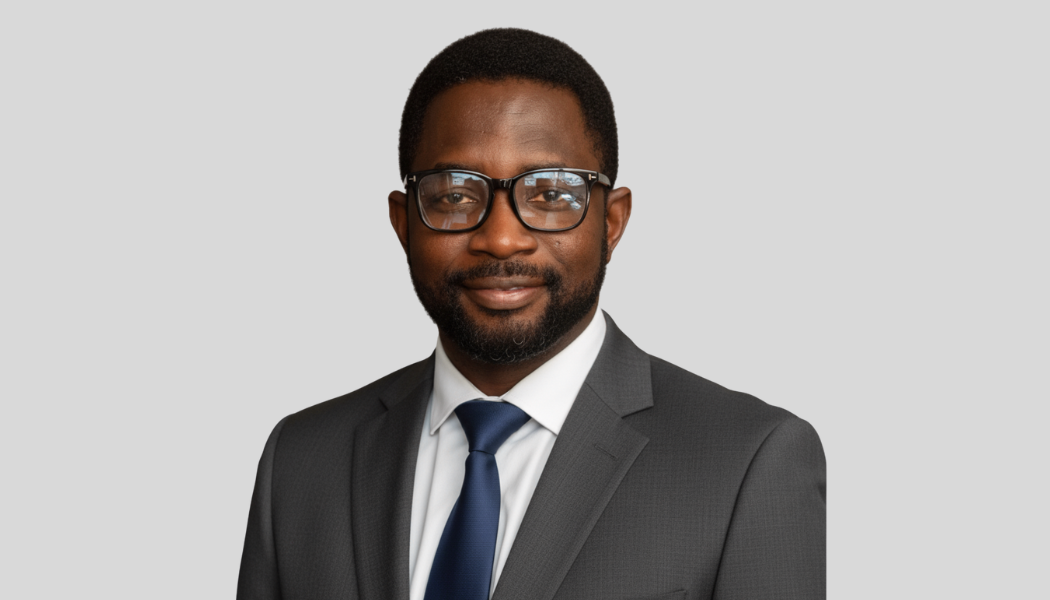
On a night that celebrated innovation across multiple frontiers, the announcement of Mr. Semiu Temidayo Fasasi as winner of the Dratech Environmental Sustainability Innovation Award 2024 drew a particular kind of respect. It was not just the excitement of another name being called. It was the recognition of a professional who has chosen one of the hardest questions of our time and decided to spend his career answering it with data, engineering discipline, and patient fieldwork.
Selected from 17 nominees and emerging among the top 10 recognised winners after meeting all of this year’s rigorous judging criteria, Mr. Fasasi now joins a growing circle of African engineers and researchers redefining what environmental responsibility looks like in real industrial settings. His award is a statement that sustainability is no longer an optional add-on. It is central to how serious economies plan, build, and grow.
Tonight, his story sits at the centre of that conversation. The Dratech Environmental Sustainability Innovation Award is not given out lightly. It is reserved for individuals whose work does more than produce good reports or attractive presentations. The judges look for professionals who can show that their ideas survive the test of real-world application, in factories, plants, laboratories, and policy rooms where decisions carry cost, risk, and long-term implications.
In that context, the recognition of Semiu Temidayo Fasasi feels almost inevitable. An environmental and mechanical engineer who works at the intersection of air quality, energy systems, and data driven decision making, he represents a new generation of African technical leaders who treat sustainability as both a scientific discipline and a practical obligation. His path has not been shaped by slogans, but by a persistent effort to understand how emissions behave, how industrial systems fail, and how the right interventions can protect both performance and the environment. The applause in the hall this evening was, in many ways, a response to that long, steady work.
Foundations of excellence in engineering
Before his name began to appear in conversations about environmental innovation, Semiu was first known as a high-performing mechanical engineering student in Nigeria. Trained as a mechanical engineer in the country, he graduated at the top of his class at the Federal University of Technology Akure and received multiple awards for academic excellence and service. Those early recognitions did more than decorate a transcript. They signalled a mind comfortable with complex systems, careful analysis, and the discipline required to work through difficult problems.
From there, he began to build a career focused on a simple but demanding question: how can industries operate more cleanly while still meeting performance and regulatory demands?
That question lies at the heart of some of the biggest debates in modern development. Industries need to function, energy needs to flow, and economies need to grow. At the same time, societies are no longer willing to accept polluted air, unchecked emissions, and opaque environmental practices. The bridge between these pressures is not rhetoric, but engineering. This is the space that Semiu chose to occupy.
Graduate research with real-world consequences
He is currently advancing his graduate studies in mechanical engineering at Colorado State University, where his research centers on methane detection technologies, emissions measurement, and practical ways to help industry meet strict environmental standards. Methane is a powerful greenhouse gas, and yet it often escapes attention in public conversation, overshadowed by carbon dioxide. For regulators and technical leaders, however, methane is a critical piece of the climate and air quality puzzle.
By focusing on how methane leaks are detected, measured, and managed, Semiu’s work speaks directly to one of the most immediate challenges in emissions control. His research does not remain in theoretical models alone. It is grounded in the question of how facility operators, regulators, and engineers can use evidence from reliable measurements to reduce emissions without shutting down entire systems.
It is this marriage of research depth and practical thinking that caught the attention of the Dratech judges.
Field experience that touches real sites and real air
His roles in Nigeria, South Korea and United State of America as a project/design engineer, research assistant, and graduate research assistant have equipped Semiu with hands-on experience inspecting sites, monitoring air quality, validating environmental equipment, and preparing clear reports that regulators and industry leaders can act on. While many professionals specialize either in field inspections or in data analysis, his work cuts across both.
In the field, he has interacted with the actual conditions that determine whether a system is clean or unsafe. Site inspections and air quality monitoring are not abstract tasks. They involve walking facilities, understanding how mechanical systems behave under real load, and noticing where emissions might be escaping or equipment may be underperforming.
Validating environmental equipment is another layer of this responsibility. Instruments that measure emissions must be accurate, reliable, and properly maintained. If they fail, entire regulatory frameworks can be undermined. By working directly on equipment validation, he supports the credibility of the very data that policymakers and industrial leaders depend on.
Equally important is his ability to translate what he sees and measures into reports that can guide action. Regulators, board members, and plant managers cannot stand over every sensor. They rely on reports that are clear, honest, and structured for decision making. Semiu’s work in preparing such reports has contributed to better planning, stronger compliance, and more structured pollution reduction efforts.
Making sense of emissions data
In sustainability engineering, project success is often defined by the rigor of its data workflows. Semiu has distinguished himself in this discipline through a proven record of strong analytical and data-driven problem-solving.
He combines his field experience with strong analytical skills, using tools like Python, MATLAB, and R to turn complex emissions data into insights that guide compliance, planning, and pollution reduction. Emissions measurements can generate large volumes of data across time, locations, and equipment. Without the capacity to process and interpret this data, organisations stumble in the dark.
By applying data analysis tools in a structured way, he helps trace patterns that reveal where systems are slipping out of compliance, where leaks might be forming, or where controls need to be strengthened. This is how environmental measurement shifts from a formal obligation to a real management tool.
The Dratech jury took particular note of this integration of data-driven methods with hands-on engineering. Many organizations talk about data-driven decision-making. Far fewer have professionals who can walk a site with a hard hat in the morning and then sit down with code in the afternoon and translate what they saw into meaningful insights.
Experience across oil and gas, Process piping, and manufacturing
Before deepening his research focus, Semiu’s earlier work in project and design engineering exposed him to large scale industrial projects in oil and gas, energy efficiency, project management, production, and manufacturing. These are sectors where environmental performance and operational performance are tightly linked. Small failures can generate large risks, and small improvements can produce significant gains.
In these environments, he helped improve system reliability, reduce pollutants, and support safer, more sustainable operations. Whether it was a refrigeration system that needed to avoid leaks of harmful refrigerants, or an industrial process that had to operate within strict emissions limits, the same principle applied. Good engineering is good environmental practice.
This breadth of exposure means that when he works on air quality and emissions questions today, he does so with a clear understanding of industrial realities. He knows the pressures that facility managers face, the trade-offs that are often discussed behind closed doors, and the technical limits of current systems. That context matters when designing solutions that are not just ideal, but workable.
A commitment to people, not only systems
Beyond the technical work, Semiu has been active in mentoring aspiring engineers, supporting graduate school applicants, and contributing to professional and student communities in engineering and clean energy through trainings, seminars, and career coaching. This is not a small detail. The sustainability agenda cannot move forward on the strength of technical innovation alone. It also depends on the growth of a wider community of professionals who understand what is at stake.
By guiding younger engineers, sharing knowledge about graduate studies, and participating in outreach, sustainability events, and career development initiatives, he reinforces a culture of responsibility and aspiration. He has not limited his contribution to specific projects or roles. He has chosen to invest in people.
Taken together, his journey so far shows a professional who is using engineering, data, and collaboration to support cleaner air, more responsible energy use, and better environmental outcomes for both industry and society.
This holistic profile, grounded in both technical depth and community engagement, aligns closely with what the Dratech Environmental Sustainability Innovation Award seeks to highlight.
Why he deserves the Dratech Environmental Sustainability Innovation Award
The justification for his selection becomes clear when his work is viewed as a whole, rather than as separate lines on a résumé.
He deserves the Dratech Environmental Sustainability Innovation Award because his work directly improves how industries manage air quality, emissions, and environmental responsibility. Instead of treating sustainability as an abstract principle, he has blended research with practical field experience, using real data, site inspections, and equipment validation to help reduce pollutants and support cleaner operations.
His approach shows that sustainability is not only scientific, it is achievable when solutions are designed to work in the real world. Where some discussions about the environment remain broad and distant, his work is specific and applied. It deals with the kind of questions that determine whether a plant meets its regulatory obligations, whether nearby communities breathe safer air, and whether industry can meet environmental standards without losing sight of performance.
Through his efforts, industries gain clearer pathways to safer air, responsible energy use, and long term environmental protection. That kind of impact speaks directly to the heart of Dratech’s mission: to recognise and encourage people who are quietly shaping a more sustainable industrial future.
Environmental sustainability and the wider national agenda
Nigeria, like many countries, sits at a crossroads. The need for economic growth, industrial activity, and energy security is undeniable. At the same time, the realities of climate change, urban air pollution, and public health cannot be ignored. Voices like that of Mr. Fasasi bring technical clarity to what can sometimes feel like an overwhelming debate.
His work on emissions measurement, methane detection, and air quality monitoring feeds into the larger national conversation about how to craft regulations that are firm yet realistic, and how to support industries in meeting those regulations without collapsing under the weight of compliance costs.
Strong environmental governance does not mean shutting down industrial ambition. It means demanding better performance, better equipment, and better planning. It means drawing a line between acceptable operational risk and avoidable harm. Professionals who can interpret emissions data, validate monitoring systems, and propose practical mitigation steps are essential to making this shift.
The recognition given to him tonight by Dratech International signals an understanding that the future of African industry will depend on such expertise. It is a reminder that environmental sustainability is not an imported agenda, but a local necessity tied to health, resilience, and responsible development.
A message to the next wave of innovators
As the cameras move on and the hall begins to empty, the significance of this award reaches beyond one individual. It speaks to students currently wrestling with complex equations in engineering classrooms, to early career professionals looking for direction, and to researchers wondering whether their focus on emissions or energy systems will ever be fully appreciated.
The story of Mr. Semiu Temidayo Fasasi offers a clear answer. There is space, and growing recognition, for those who choose to work at the point where industrial reality meets environmental responsibility.
For Dratech International, this moment is also an invitation. As planning begins for the Dratech Conference and Awards 2025, innovators, researchers, students, policy thinkers, and environmental leaders are encouraged to step forward with their own contributions. Whether it is a new way of monitoring air quality, a smarter approach to energy use in industry, or a data-driven method for reducing emissions in high-impact sectors, the ecosystem needs more ideas that can survive contact with the real world.
The Environmental Sustainability Innovation Award will again seek out individuals whose work proves that cleaner operations are not a distant dream, but a practical path. The profile of this year’s winner sets a clear benchmark. It shows that deep technical understanding, serious engagement with data, grounded field experience, and a willingness to mentor others are all part of what the future demands.
As the 2024 edition of the Dratech International Conference draws to a close, the image that remains is of a thoughtful engineer whose work speaks quietly but powerfully to the future of environmental stewardship in industry. In celebrating Mr. Semiu Temidayo Fasasi today, Dratech International is not only honouring one man. It is reinforcing a message that must guide the years ahead: sustainability must sit at the core of how we build, operate, and grow.
For those already working in this space, it is an encouragement to continue. For those considering where to direct their talent, it is a clear signal that the world needs more professionals ready to do what he has done, to stand at the intersection of air quality, energy systems, and data driven decision making, and to turn that position into cleaner air and a more responsible future.
The call for the 2025 edition is open in spirit. The next chapter of this story will be written by those who decide, now, to answer it.